
Blog
Common Pizza Oven Mistakes That Ruin Restaurant-Quality Results

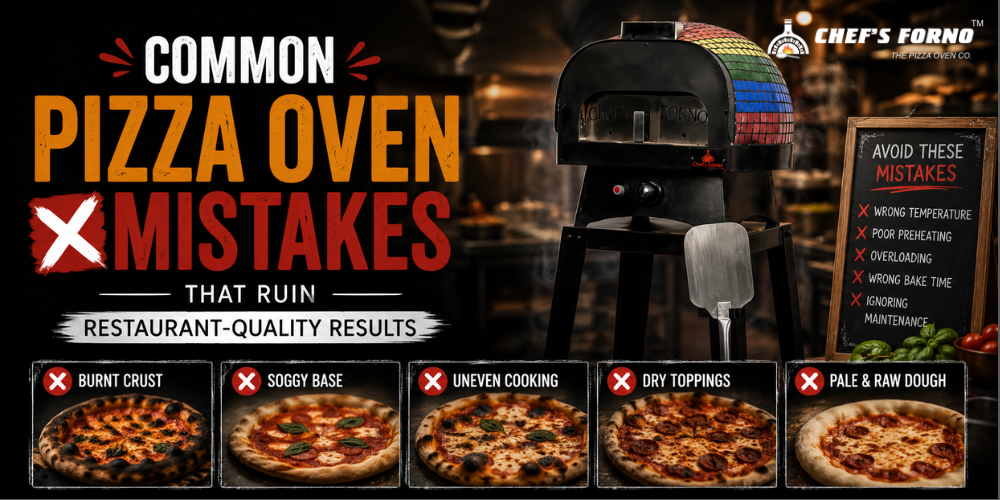
You’ve perfected your dough recipe. You’ve sourced premium cheese, fresh toppings, and quality flour.
Yet the pizza still comes out with a soggy base, burnt edges, uneven toppings, or an undercooked centre.
Sound familiar?
The good news is that your recipe probably isn’t the problem.
In professional kitchens, most pizza quality issues come down to pizza oven mistakes, not ingredients. Even experienced chefs occasionally overlook simple habits that affect heat distribution, cooking consistency, and overall results.
Let’s look at the most common mistakes and, more importantly, how to fix them.
Mistake #1: Not Preheating the Oven Properly
What it looks like
- Pale crust
- Dough sticking to the oven floor
- Cheese cooks before the base
This is probably the most common of all pizza oven mistakes.
Many operators assume the oven is ready as soon as the display reaches the target temperature. In reality, the baking stone or oven floor also needs time to absorb and store heat.
If the floor isn’t fully heated, the pizza base cooks slowly while the toppings continue cooking.
How to fix it
Always allow sufficient preheating before service.
Commercial pizza ovens often need additional time after reaching the displayed temperature so the baking surface heats evenly.
The first pizzas of the day should never be used to warm up the oven.
Mistake #2: Trying to Cook Too Many Pizzas at Once
We’ve all seen it happen.
The dinner rush begins, orders pile up, and suddenly every available space inside the oven is filled.
The result?
Uneven cooking.
When pizzas are packed too closely together, airflow becomes restricted and heat cannot circulate properly.
This leads to one side cooking faster while another remains undercooked, a classic example of an uneven cooking pizza oven issue.
How to fix it
Cook within the oven’s recommended capacity.
Leaving adequate space between pizzas allows heat to circulate evenly and helps every pizza cook consistently.
Ironically, cooking slightly fewer pizzas per batch often increases total output because fewer pizzas need to be remade.
Mistake #3: Ignoring the Condition of the Baking Surface
The oven floor works harder than almost any other component.
Over time, flour, burnt cheese, grease, and food residue build up on the stone or baking surface.
Cracked or damaged baking stones can also create hot and cold spots.
The result is inconsistent crust colour and unpredictable baking performance.
How to fix it
Inspect the oven floor regularly.
Clean away burnt residue between services and replace damaged baking stones when necessary.
A well-maintained baking surface improves heat transfer and produces more consistent pizzas.
Mistake #4: Overlooking Ventilation Problems
Many restaurant owners focus only on oven temperature.
However, ventilation plays an equally important role.
Poor airflow can cause unstable temperatures, excessive smoke, and slower heat recovery.
If you frequently notice your pizza oven not getting hot enough, ventilation may be part of the problem rather than the heating system itself.
How to fix it
Ensure the oven is installed according to the manufacturer’s recommendations.
Regularly inspect exhaust systems and ventilation pathways to maintain stable operating conditions.
Good airflow helps the oven recover heat more efficiently during busy service.
Mistake #5: Skipping Routine Maintenance
Commercial ovens work hard every day.
Like any professional equipment, they require regular maintenance.
Ignoring small issues often leads to larger problems later, including inconsistent temperatures, damaged heating elements, worn door seals, and reduced efficiency.
Many pizza oven troubleshooting issues can be avoided with scheduled maintenance.
How to fix it
Create a simple maintenance schedule that includes:
- Cleaning the baking chamber
- Inspecting door seals
- Checking burners or heating elements
- Removing accumulated grease and ash
- Servicing the oven according to the manufacturer’s recommendations
If you’d like a detailed maintenance checklist, read our guide on How to Maintain a Commercial Pizza Oven.
Mistake #6: Using the Wrong Oven for Your Pizza Style
Not every pizza is meant to bake in the same type of oven.
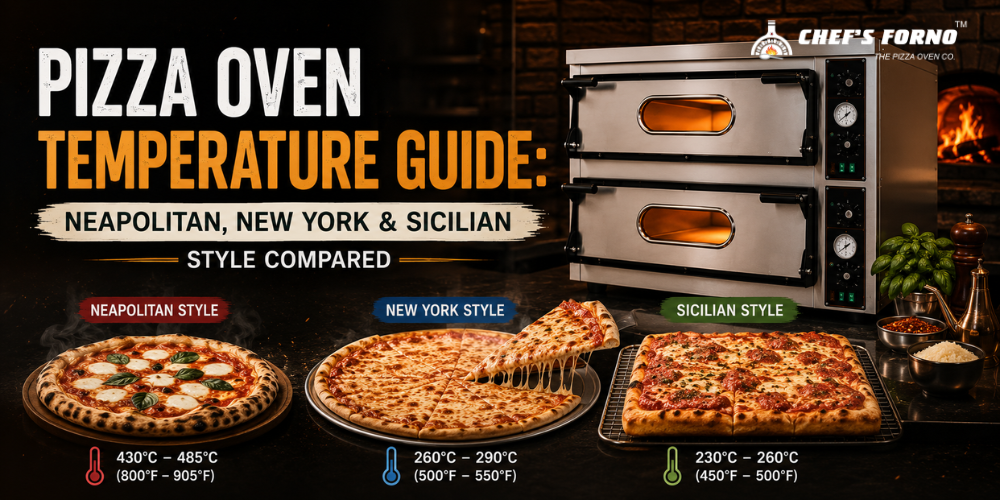
A Neapolitan pizza needs extremely high temperatures and fast cooking.
A New York-style pizza performs better with controlled, moderate heat.
Sicilian pizzas require longer baking times.
Trying to produce every style in the same setup often creates quality problems, including the common complaint:
“Why is my pizza crust soggy?”
The answer is often simple.
The oven doesn’t match the pizza style.
How to fix it
Choose equipment that suits your menu rather than trying to make one oven do everything.
If you’re unsure which oven fits your business, our guide on Pizza Oven Temperature by Style explains how different ovens support different pizza styles.
When the Problem Isn’t You, It’s the Oven
Sometimes the issue isn’t operator error.
Older ovens gradually lose efficiency.
They recover heat more slowly.
Temperatures fluctuate.
Baking becomes inconsistent.
If you’ve addressed maintenance, airflow, and operating techniques but still experience recurring quality issues, it may be time to evaluate your equipment.
Modern commercial ovens, such as Chef’s Forno’s Wood Fired Pizza Oven: Brick Series and other commercial pizza oven solutions, are designed to maintain stable temperatures throughout long service periods, helping restaurants produce consistent results even during peak hours.
Case Study: Small Changes, Big Results
A neighbourhood pizzeria in Hyderabad was receiving mixed customer feedback.
Some pizzas had perfectly crisp crusts, while others were soft in the centre or unevenly baked.
Initially, the owners believed the dough recipe needed improvement.
After reviewing their kitchen operations, they discovered several avoidable pizza oven mistakes.
The oven was rarely preheated long enough before lunch service.
Staff regularly overloaded the baking chamber during busy periods.
The baking stone hadn’t been replaced in years.
Within two weeks of correcting these issues, consistency improved dramatically.
Customer complaints decreased, food waste was reduced, and the kitchen no longer needed to remake undercooked pizzas.
Several months later, as business expanded, the restaurant upgraded to a Chef’s Forno commercial pizza oven, allowing the team to maintain the same quality even during peak weekend service.
Quick Troubleshooting Checklist
Before changing your recipe, ask yourself:
- Did I preheat the oven long enough?
- Am I overcrowding the oven?
- Is the baking surface clean and undamaged?
- Is ventilation working properly?
- Has the oven been serviced recently?
- Does my oven suit the pizza style I’m making?
If you answer “no” to any of these questions, you’ve likely found the source of the problem.
Frequently Asked Questions
1. What are the most common pizza oven mistakes?
The most common issues include insufficient preheating, overcrowding the oven, poor maintenance, damaged baking surfaces, ventilation problems, and using the wrong oven for the pizza style.
2. Why is my pizza oven not getting hot enough?
Possible causes include inadequate preheating, faulty heating components, ventilation issues, or overdue maintenance.
3. Why is my pizza crust soggy?
A soggy crust is often caused by insufficient oven temperature, poor heat transfer from the baking surface, excessive toppings, or baking the wrong pizza style in an unsuitable oven.
4. How do I fix uneven cooking in a pizza oven?
Avoid overcrowding the oven, clean the baking surface regularly, inspect the stone for damage, and ensure proper airflow around each pizza.
5. When should I replace my commercial pizza oven?
If the oven can no longer maintain consistent temperatures despite regular servicing, upgrading to a modern commercial oven may improve quality, efficiency, and productivity.
Final Thoughts
Most great pizzas don’t fail because of bad ingredients.
They fail because of small operational habits that gradually affect consistency.
Fortunately, most pizza oven mistakes are easy to identify and even easier to fix.
By preheating properly, maintaining your equipment, avoiding overcrowding, and choosing the right oven for your pizza style, you can consistently produce restaurant-quality pizzas that keep customers coming back.
And if your current oven simply can’t maintain stable heat anymore, it may be worth exploring a modern commercial solution designed for consistent, high-volume performance.