

Blog
Pizza Oven Installation Checklist: Space, Ventilation & Electrical Requirements

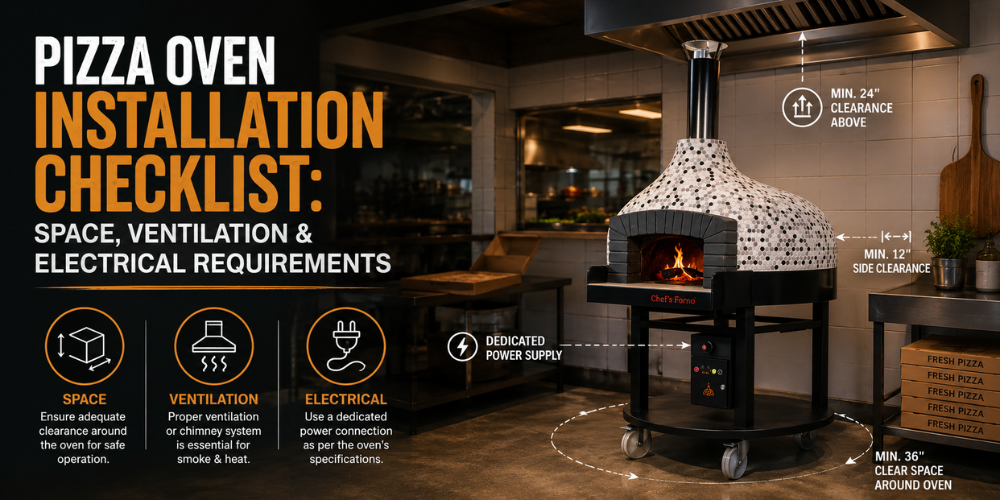
Most pizza oven installation delays don’t come from the oven itself; they come from ventilation, electrical, or gas line surprises discovered after the equipment has already arrived. Working through this checklist before you place an order can save weeks of avoidable back-and-forth with contractors.
1. Space and Clearance
Every oven needs adequate clearance on all sides, not just to physically fit, but to allow safe operation and cleaning access. Check:
- Front working clearance for the operator
- Side clearance from adjacent equipment or walls (for heat dissipation and safety)
- Ceiling height clearance is particularly important for taller wood-fired dome models
2. Ventilation Requirements (Differ by Fuel Type)
This is the section most generic buying guides skip, and it’s the one that causes the most installation delays.
- Wood-fired ovens need a proper flue/chimney system capable of handling continuous smoke output, often requiring roof or exterior wall penetration
- Gas-fired ovens need dedicated exhaust ventilation sized to the oven’s output, and in many cases, a gas safety shutoff system
- Electric ovens generally have the lowest ventilation demands of the three, making them the simplest to retrofit into existing kitchens without major exhaust modifications
Confirm with your local kitchen exhaust contractor whether your existing system can handle the new equipment, or whether it needs modification, before the oven arrives, not after.
3. Electrical Load (Electric Ovens) or Gas Line Capacity (Gas Ovens)
Electric ovens draw significant power, and older kitchen electrical systems may not have spare capacity for a new high-draw appliance without a panel upgrade. Have an electrician confirm available capacity against the oven’s rated power draw before ordering.
For gas ovens, confirm your existing gas line can supply the required pressure and volume, or budget for a line upgrade as part of the installation cost; this is often missed in initial budgeting and becomes a late surprise.
4. Flooring and Fire Safety
Wood-fired ovens in particular need fire-safe flooring and adequate clearance from combustible materials nearby. Even gas and electric ovens benefit from flooring that can handle consistent heat exposure and is easy to clean around, since spills and ash (for wood-fired) are a daily reality in a working kitchen.
5. Who to Involve Before Installation Day
- Electrician, to confirm and prepare electrical capacity
- Gas technician (if applicable), to confirm line capacity and safety compliance
- Kitchen exhaust contractor, to confirm ventilation compatibility
- Your oven supplier’s installation team to walk through final placement, utility connection points, and commissioning
Coordinating these parties before delivery day, rather than scrambling to arrange them after the oven arrives, is the single biggest factor in a smooth installation.
Final Pre-Installation Checklist
- Measured available space, including clearance on all sides
- Confirmed ceiling height is sufficient for the model chosen
- Ventilation/exhaust system confirmed compatible or scheduled for upgrade
- Electrical capacity confirmed (electric ovens) or gas line capacity confirmed (gas ovens)
- Flooring assessed for fire safety and heat exposure
- Electrician, gas technician (if needed), and exhaust contractor all briefed on installation date
- The installation team from your supplier scheduled and briefed on site specifics
- Staff training scheduled to follow shortly after installation
If you’d like a straightforward site assessment before you order, get in touch with the Chef’s Forno team. We can walk through your specific space requirements ahead of delivery.
FAQs
What’s the most commonly missed step in pizza oven installation? Ventilation compatibility, many kitchens assume existing exhaust systems can handle a new oven without checking actual capacity requirements first.
Do electric pizza ovens need less installation work than gas or wood-fired? Generally yes, electric ovens typically have lower ventilation demands, though electrical capacity still needs to be confirmed before installation.
How far in advance should I arrange an electrician or exhaust contractor? Ideally before you place your equipment order, so any necessary upgrades are already scheduled by the time the oven is ready for delivery.


2 thoughts on “Pizza Oven Installation Checklist: Space, Ventilation & Electrical Requirements”