

Blog
Wood-Fired vs Gas vs Electric Pizza Oven: Which Costs Less to Run?

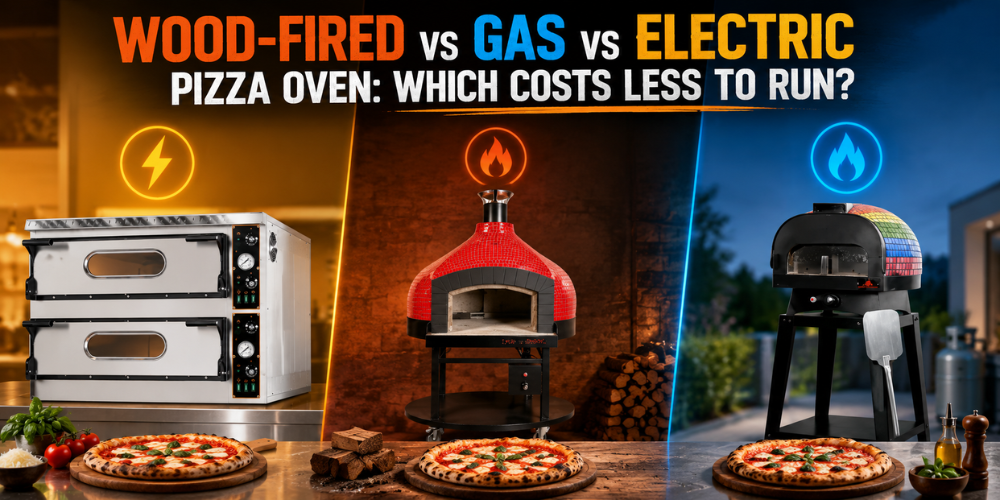
The price tag on a pizza oven is only half the financial picture. What it costs to run every single day, for years, often matters more to your bottom line than what you paid upfront. Fuel type is the single biggest driver of that ongoing cost, and it’s a decision worth thinking through properly rather than defaulting to whatever look you had in mind for the restaurant.
What Actually Drives Running Cost
Three things determine an oven’s real running cost, regardless of fuel type:
- Preheat time, how long the oven takes to reach cooking temperature, and how often you’re preheating from cold versus keeping it running
- Insulation quality, a well-insulated oven holds heat efficiently between uses; a poorly insulated one is constantly re-heating, burning more fuel or drawing more power to compensate
- Fuel price stability, electricity prices are relatively predictable; wood and gas prices can swing with market conditions, affecting your monthly cost in ways electric doesn’t
Wood-Fired Ovens
Wood-fired ovens are prized for the smoky flavor and high heat they bring to Neapolitan-style pizza, and if you have reliable access to affordably priced wood, the raw fuel cost can be genuinely low. The catch is labour, tending a wood fire, monitoring temperature manually, and managing ash and debris take staff time that gas and electric ovens don’t require. Wood pricing can also vary seasonally and regionally, which makes monthly costs less predictable than the other two options.
Best for: Restaurants where authentic wood-fired flavour is a core part of the menu identity, and where dedicated staff time for fire management is already factored into kitchen operations.
Gas Pizza Ovens
Gas ovens sit in the middle, generally more affordable to run than wood on a per-pizza basis, faster to reach temperature than most electric models, and don’t require the manual fire-tending that wood does. The main added cost is ventilation: gas ovens need proper exhaust systems, which adds to the upfront installation cost, even if the day-to-day running cost is moderate.
Best for: Mid-to-high volume restaurants that want consistent output without the labour overhead of wood, and that already have (or can install) proper ventilation.
Electric Pizza Ovens
Electric ovens offer the most predictable running cost of the three; electricity pricing doesn’t fluctuate the way wood and gas can, and modern electric decks are built for efficient heat retention with minimal ongoing maintenance. They also skip the ventilation requirement that gas ovens need, which can lower total setup cost for indoor and cafe-style kitchens. The trade-off is that electric ovens generally don’t reach the extreme temperatures wood-fired ovens can, which matters if very-high-heat Neapolitan-style is your specific goal.
Best for: Cafes, indoor kitchens, cloud kitchens, and any setup where predictable monthly costs and lower maintenance matter more than the highest possible cooking temperature. Chef’s Forno’s Electric Pizza Ovens: Smart Series is built specifically around this use case.
Quick Comparison
| Fuel Type | Setup Cost | Running Cost Predictability | Labor Requirement | Max Heat |
|---|---|---|---|---|
| Wood-fired | Moderate-High | Lower (fuel price varies) | Higher (fire tending) | Highest |
| Gas | Moderate (ventilation needed) | Moderate | Lower | High |
| Electric | Lower (no ventilation needed) | Highest | Lowest | Moderate-High |
Which Should You Choose?
If wood-fired flavour is central to your brand and you have staff bandwidth for fire management, the running cost is worth it. If you want dependable, predictable monthly costs with less hands-on labor, gas or electric is usually the more sustainable long-term choice , and for indoor or space-constrained kitchens, electric often wins on total setup cost too.
FAQs
1. Is wood-fired always more expensive to run than gas or electric?
Not always, it depends heavily on local wood availability and pricing. In areas with a cheap, reliable wood supply, running costs can be competitive; the bigger cost difference is usually in labour, not fuel.
2. Do gas pizza ovens need special ventilation?
Yes, gas-fired ovens require proper exhaust ventilation, which should be factored into the total installation cost, not just the price of the unit.
3. Can an electric oven reach true Neapolitan cooking temperatures?
Some high-end electric models get close, but wood-fired and certain gas-assisted ovens generally reach the extreme heat (around 450°C+) that classic Neapolitan-style pizza is cooked at fastest.